Robotic Partial Nephrectomy and Kidney Cancer Surgery in NYC
Partial nephrectomy is a kidney-sparing surgery used to remove a kidney tumor while preserving as much healthy kidney tissue as possible. For many patients with a small or localized renal mass, robotic partial nephrectomy is preferred over removing the entire kidney because it treats the cancer while protecting long-term kidney function.

Dr. Tan performs robotic partial nephrectomy using the da Vinci robotic platform, which allows precise dissection, tumor removal, kidney reconstruction, and suturing through small keyhole incisions. During surgery, intraoperative ultrasound is used to locate the tumor in real time, define the depth of the mass, identify nearby blood vessels or collecting system structures, and guide the surgical margin.
The goal is simple: remove the tumor completely while preserving the maximum amount of functional kidney.
"Kidney-sparing is always the goal when it is oncologically safe. The art is knowing when to preserve kidney, when to remove kidney, and how to choose the approach that gives the patient the best long-term outcome."- Dr. Wei Phin Tan, MD, MHS, FACS
Retroperitoneal Robotic Partial Nephrectomy
For many posterior kidney tumors, Dr. Tan uses a retroperitoneal robotic approach. This allows direct access to the kidney from the back side of the body without entering the abdominal cavity. By avoiding the bowel and abdominal organs, the retroperitoneal approach may reduce bowel manipulation and may allow a faster return of bowel function in selected patients.
This approach is especially useful for posterior renal masses, patients with prior abdominal surgery, and tumors that can be reached more directly from behind the kidney.
Transperitoneal Robotic Partial Nephrectomy
For anterior, hilar, larger, or more complex kidney tumors, a transperitoneal robotic approach may provide better working space and visualization. This approach enters the abdominal cavity and allows wide exposure of the kidney, renal hilum, blood vessels, and surrounding structures.
Dr. Tan chooses the surgical approach based on tumor location, complexity, kidney anatomy, prior surgery, body habitus, and the safest route for complete tumor removal.
Same-Day Discharge After Robotic Kidney Surgery
Many appropriate patients can go home the same day after robotic partial nephrectomy. Same-day discharge depends on the complexity of surgery, bleeding risk, pain control, kidney function, medical history, and overall recovery in the immediate postoperative period. Patients who need additional monitoring may stay overnight.
Robotic Radical Nephrectomy and Caval Thrombectomy
Some kidney cancers are too large, central, invasive, or complex to safely treat with partial nephrectomy. In those cases, radical nephrectomy, removal of the entire kidney, may be the safest cancer operation.
For selected patients with advanced renal cell carcinoma, the tumor can extend from the kidney vein into the inferior vena cava, the large vein that returns blood from the lower body to the heart. This is called an IVC tumor thrombus. These cases require careful planning because the operation involves both kidney cancer removal and vascular control.
Dr. Tan performs robotic radical nephrectomy with caval thrombectomy in carefully selected patients. This minimally invasive approach may offer less blood loss, smaller incisions, and faster recovery compared with traditional open surgery in appropriate cases. However, not every IVC thrombus is suitable for robotic surgery. The safest approach depends on the thrombus level, tumor extent, anatomy, cardiopulmonary risk, and need for vascular or multidisciplinary support.
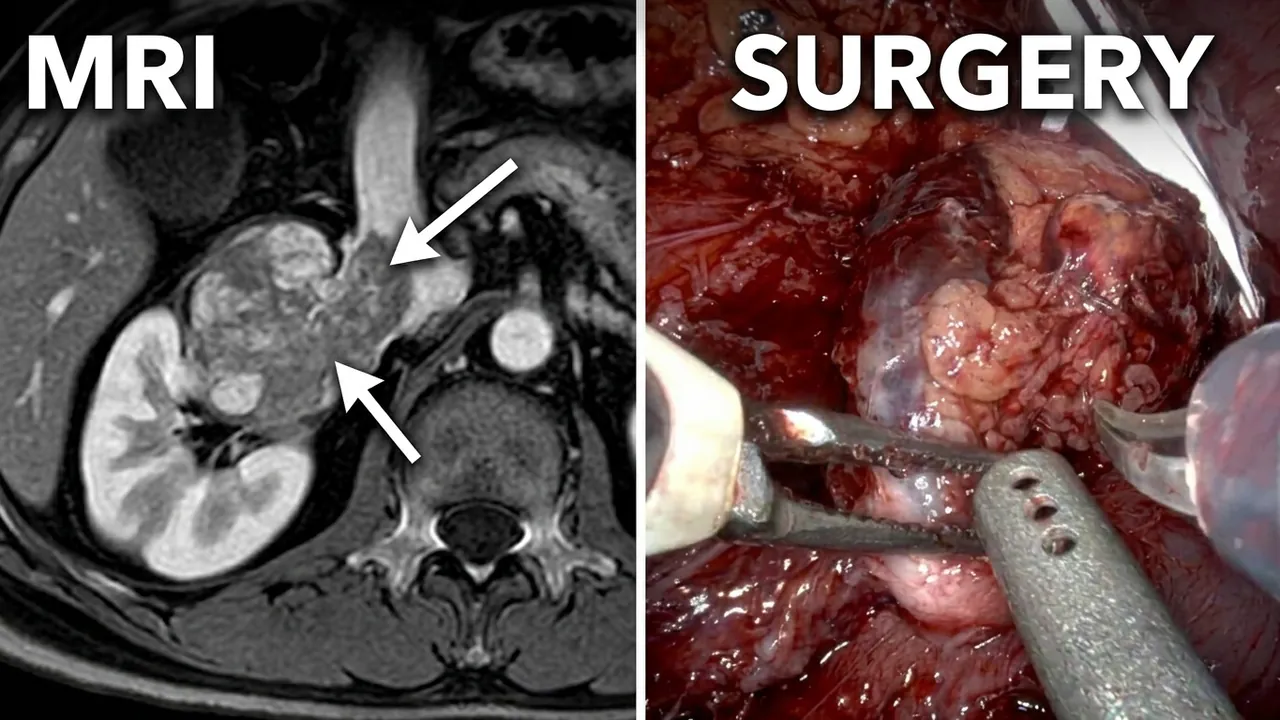
Robotic Radical Nephrectomy & Caval Thrombectomy for Kidney Cancer: A Detailed Surgical Approach
A step-by-step look at the operation. Contains surgical footage. Posted April 2025.
Watch on YouTube →Multidisciplinary Kidney Cancer Care
Advanced kidney cancer with tumor thrombus requires coordination between urologic oncology, vascular surgery, anesthesia, radiology, medical oncology, and sometimes cardiothoracic surgery. Preoperative imaging is reviewed carefully to define the tumor, renal vessels, IVC involvement, and any evidence of metastatic disease.
The goal is complete cancer removal while preserving kidney function and minimizing surgical risk whenever possible.
Signatera MRD Testing After Kidney Cancer Surgery
After kidney cancer surgery, surveillance usually relies on pathology, stage, grade, surgical margins, kidney function, and follow-up imaging. Signatera is a tumor-informed circulating tumor DNA test that may provide additional information by looking for molecular evidence of minimal residual disease, also called MRD.
For renal cell carcinoma, ctDNA testing is still an emerging tool. A positive result may suggest a higher risk of recurrence and may support closer surveillance or medical oncology discussion. A negative result may be reassuring, but it does not eliminate the need for standard imaging follow-up.
Dr. Tan uses Signatera as one piece of the larger kidney cancer surveillance plan. Results are interpreted alongside tumor stage, grade, histology, surgical margins, imaging findings, kidney function, and the patient's overall risk profile.
Signatera does not replace CT scans, MRI, chest imaging, lab work, or standard kidney cancer follow-up. It may help personalize surveillance intensity for selected patients after partial nephrectomy or radical nephrectomy.
Why Kidney-Sparing Surgery Matters
Whenever it is safe from a cancer standpoint, preserving kidney tissue matters. The kidneys are responsible for filtering blood, balancing electrolytes, regulating blood pressure, and maintaining overall metabolic health. Removing an entire kidney can be necessary for some cancers, but preserving healthy renal parenchyma may reduce the long-term risk of chronic kidney disease.
Chronic kidney disease is not just a lab value. It is associated with higher risks of cardiovascular disease, hypertension, medication limitations, and, in severe cases, dialysis. For this reason, Dr. Tan prioritizes partial nephrectomy whenever the anatomy and cancer biology allow.
The decision is not simply "partial versus radical." The right operation depends on tumor size, tumor location, depth, proximity to blood vessels, proximity to the collecting system, baseline kidney function, the opposite kidney, patient age, medical history, and cancer aggressiveness.
The goal is to match the operation to the patient: preserve kidney when possible, remove everything necessary when required, and protect long-term health without compromising cancer control.
Frequently Asked Questions
What is the difference between partial nephrectomy and radical nephrectomy?
Am I a candidate for robotic partial nephrectomy?
What is a retroperitoneal partial nephrectomy?
What is a transperitoneal partial nephrectomy?
What is an IVC tumor thrombus?
Can robotic surgery be used for kidney cancer with IVC tumor thrombus?
What is Signatera testing for kidney cancer?
Selected Evidence (Dr. Tan's Published Work)
Dr. Tan has published on renal thermal ablation practice patterns, surgical timing in renal cell carcinoma, and other kidney cancer management questions:
- Tan WP, Schulman AA, Barton GJ, et al. Renal thermal ablation trends of American urologists. Journal of Endourology. 2020. PMID 31847586
- Chan VW, Tan WS, Leow JJ, et al. Delayed surgery for renal cell carcinoma: systematic review and meta-analysis. World Journal of Urology. 2021. PMID 34031748
Full publication list pulled live from PubMed on the Publications page.